Fully Custom, Ready in Minutes
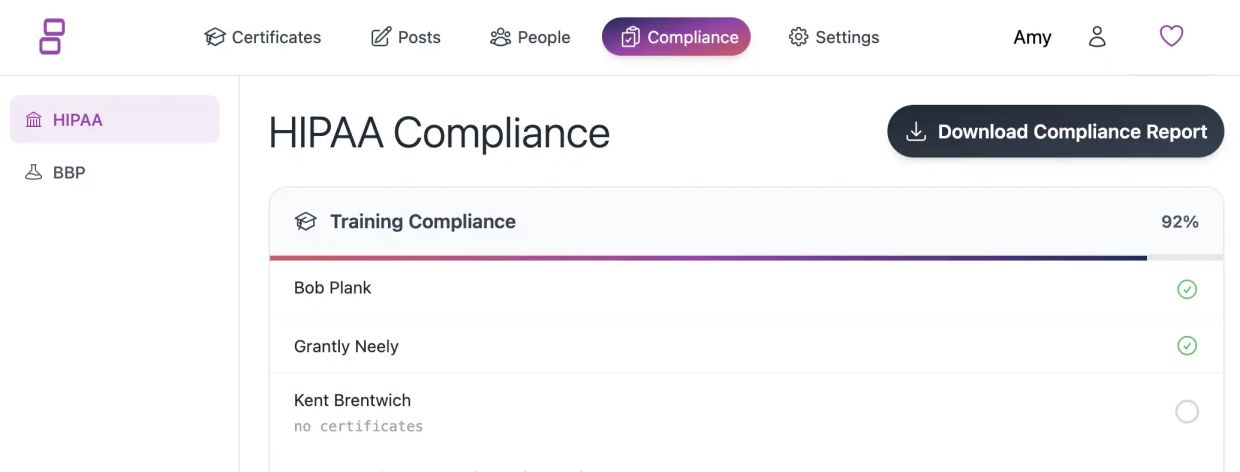
From first draft to team signatures, KnowQo handles your HIPAA policy lifecycle end-to-end. Generate, distribute, collect, and store audit-ready records — all in one place.
Policy Generator
Instantly generate HIPAA compliance policies tailored to your organization. Privacy policy, security policy, or something else, KnowQo has it.
Team Attestations
Get every employee to read, acknowledge, and sign your policies in seconds. KnowQo notifies staff and records each attestation automatically.
Policy Updates
Keep policies current with one-click updates. Staff who need to re-attest are notified automatically.
Audit-Ready Records
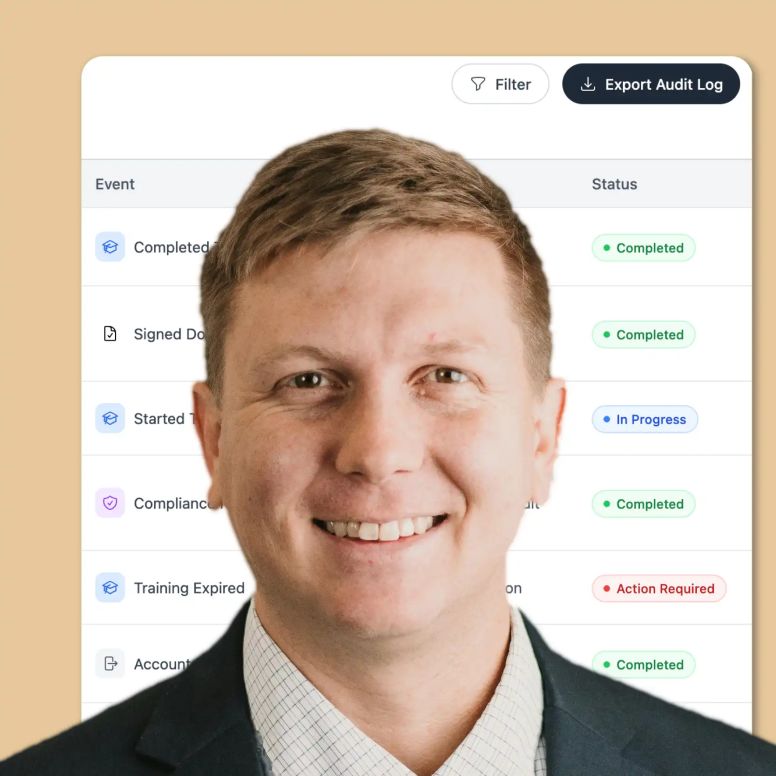
Every policy version, employee signature, and timestamp is stored and instantly producible for an HHS audit or compliance review.
Done in Minutes
Our simple dashboard lets your upload existing manuals or create your own, in minutes.

Acknowledgements Effortlessly
Your staff reviews and signs your HIPAA policies and procedures directly on their phone — no printing, no PDFs, no chasing. Every acknowledgement is timestamped and stored in your dashboard the moment they sign.

Ready in 5 Minutes
No demo. No credit card. No sales call. Just your office, compliant.
Frequently asked questions
What is the golden rule of HIPAA?
While there isn't an official golden rule of HIPAA, it might be something like: document everything and don't wing it. This serves two purposes. First, if something goes wrong and you get audited, thorough documentation will help you tremendously. Second, the simple act of documenting makes your patients and team safer.
What are the five main rules of HIPAA?
The five main rules of HIPAA are the Privacy Rule, the Security Rule, the Breach Notification Rule, the Enforcement Rule, and the Omnibus Rule.
What is a HIPAA policy?
A HIPAA policy is a written document that outlines how your organization protects patient health information and complies with HIPAA regulations. Policies cover areas like who can access PHI, how it's stored and transmitted, how breaches are handled, and how staff are trained. Having clear, written HIPAA policies isn't optional — it's a requirement, and auditors will expect to see them. Well-written policies also give your team a practical guide to follow, which reduces the risk of accidental violations.
What are the 3 HIPAA rules?
The three core HIPAA rules are the Privacy Rule, the Security Rule, and the Breach Notification Rule. The Privacy Rule sets the standards for how protected health information (PHI) can be used and disclosed. The Security Rule focuses specifically on electronic PHI (ePHI) and requires administrative, physical, and technical safeguards to protect it. The Breach Notification Rule spells out what your organization must do if a breach occurs, including notifying affected patients, HHS, and in some cases the media. While HIPAA has additional rules like the Enforcement and Omnibus Rules, these three are the ones most healthcare teams interact with day-to-day.
What is the difference between HIPAA and privacy policy?
A HIPAA Privacy Policy should describe how your organization uses and discloses protected health information (PHI), patient rights regarding their PHI, how to handle requests for access or amendment, and who is responsible for privacy compliance. KnowQo's policy generator covers these requirements for you.
What should a HIPAA Security Policy include?
A HIPAA Security Policy must address administrative, physical, and technical safeguards for electronic PHI (ePHI). This includes access controls, audit controls, integrity policies, and transmission security. KnowQo generates policies for you effortlessly.
Close your compliance gapsCan I use a HIPAA policy template?
Yes — and it's one of the most practical ways to get compliant quickly. HIPAA doesn't require custom-written policies from scratch; it requires that your policies address the required elements and that your workforce follows them. KnowQo generates templated, HIPAA-aligned policies and adapts them to your organization.
Try the policy generatorWhat happens if employees don't sign HIPAA policies?
Unattested policies are a compliance gap. If an employee violates HIPAA and there's no record of them acknowledging your policies, it weakens your defense significantly during an HHS investigation. KnowQo tracks who has and hasn't attested so you can follow up before it becomes a problem.
Close your compliance gapsDoes a small medical practice need HIPAA policies?
Yes. HIPAA applies to covered entities of every size — solo practitioners, small clinics, dental offices, and large hospital systems alike. If you handle protected health information, you need HIPAA policies in place and a workforce that has acknowledged them. KnowQo makes this achievable for small practices in minutes.
Other KnowQo Features You Might Like
HIPAA compliance doesn't stop at policies. Explore the rest of what KnowQo automates for your team.